WHO WE ARE | OUR APPOACH
A world where every mom and baby have access to quality health to thrive and live their full potential
Our Goals and Approach
To achieve our goal of reducing inequities in access to quality maternal and child healthcare in Cameroon and beyond, Empower Women Foundation is focused on helping governments and communities design and sustain responsive primary health care systems to ensure sustainability of maternal and child health services. Responsive primary health care has three important qualities: it makes products and services available when and where they are needed even for the hardest-to-reach communities, it can adapt to changes in demand and better absorb shocks and stresses, and it routinely factors in and responds to the needs and preferences of communities.

HOW WE WORK
How we Work has developed and refined an approach to co-creating innovative and responsive solutions to deliver health products and services. We start by learning what people need from their health care system. Applying their insights, we co-develop and evaluate solutions working closely with governments and communities. Next, we collaborate with governments and their partners to scale and replicate what we know works. Finally, we transition our solution to governments prepared to sustain proven solutions, providing them with the necessary support to own the solution over time.
Learn About Our Impact
Equity and Gender Approach
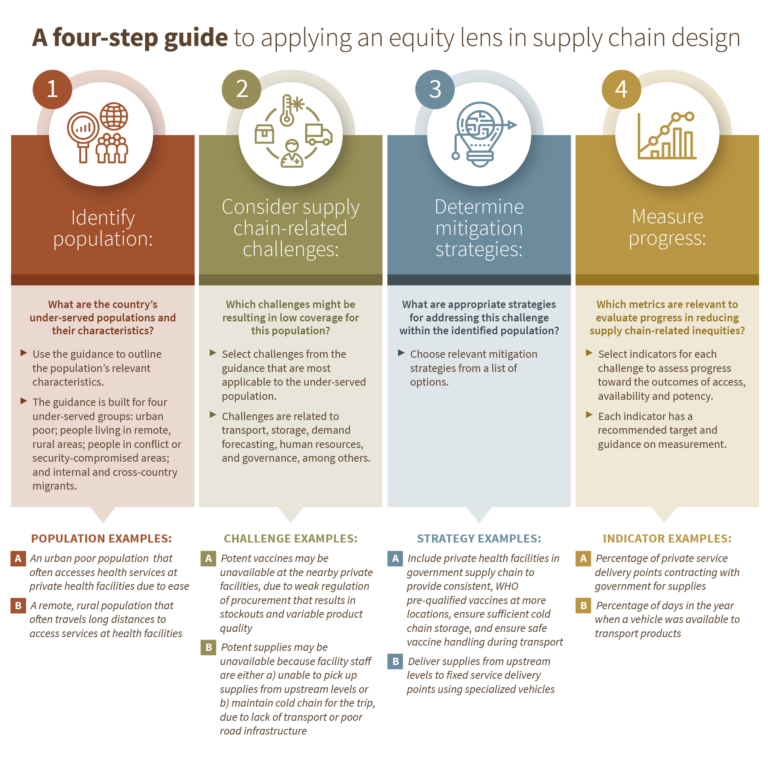
Our four-step equity approach supports governments and implementing partners by intentionally integrating equity into program design and delivery to effectively serve under-reached communities, promoting inclusive and effective health care for all. To reach populations at risk of being left behind, health systems must do more to respond to people’s needs and preferences.
We hold a unique perspective, including gender in all aspects of program design and system-strengthening initiatives, such as supply chain, health workforce and data visibility. By incorporating gender considerations into our equity approach, we can ensure that programs address the unique needs and challenges arising from gender inequity.